
2026-09-20 · Rick Bauer
What a Rodent Inspection Covers in Central Wisconsin Homes
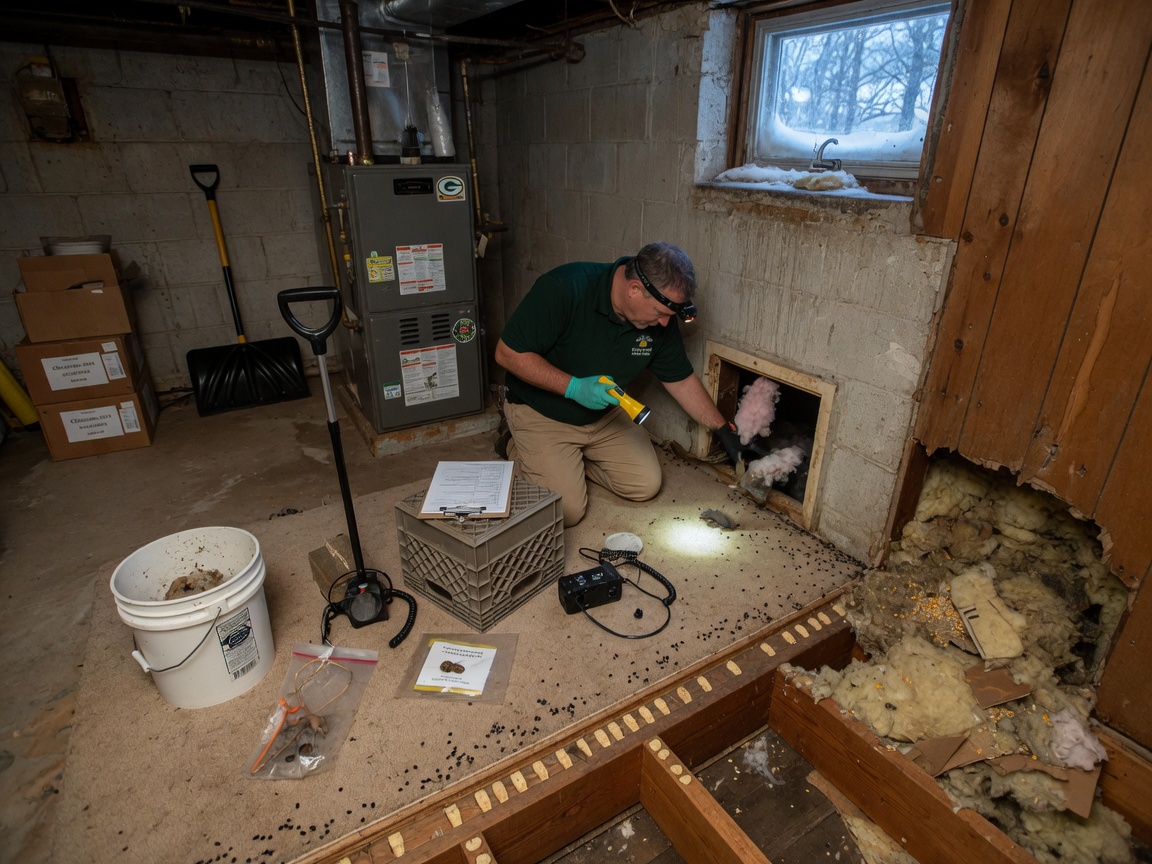
A rodent inspection in Central Wisconsin homes examines the full exterior perimeter, attic, basement or crawl space, kitchen voids, and all potential entry points, typically taking 45 to 90 minutes on a standard Marathon County property.
Exterior Perimeter and Foundation Scan
Wausau homes built before 1970 often sit on stone or early concrete foundations that settle unevenly along the Wisconsin River valley and near Rib Mountain State Park. Inspectors walk the full foundation, checking for gaps larger than a quarter inch where field mice enter during the first hard freeze. They note utility penetrations, dryer vents, and sill plates that shift after freeze-thaw cycles common in the humid continental climate. In neighborhoods such as the East Side and West Side, overgrown shrubs planted against siding create runways that rodents use nightly. The inspection also flags roofline issues on two-story homes where squirrels drop onto eaves. Findings here directly inform later exclusion work such as rodent exclusion entry point sealing.
Attic and Insulation Evaluation
Attics in Wausau and Schofield houses frequently show rodent activity because long winters push mice indoors once temperatures drop below freezing for weeks. Inspectors look for shredded insulation, urine stains on rafters, and nesting material pulled from fiberglass batts. They measure the depth of droppings to gauge how long the colony has been active and check for chewed electrical wiring near light fixtures. Homes near the Wausau Center or Leigh Yawkey Woodson Art Museum often have older knob-and-tube wiring that rodents target. The inspection notes ventilation gaps under soffits that allow entry from nearby trees. This step reveals whether insulation replacement or targeted trapping is needed before sealing begins.
Basement, Crawl Space, and Utility Areas
Basements along the East Side and in Athletic Park neighborhoods sit close to the water table fed by the Wisconsin River, creating damp conditions that attract Norway rats. Inspectors check sump pits, floor drains, and where pipes enter the foundation wall for rub marks and gnaw damage. They examine the space between floor joists for traveling mice moving from the garage into living areas. In older Downtown Wausau properties, coal chutes and root cellars still exist and require separate inspection. The process also includes checking water heater closets and laundry rooms where warm pipes provide winter shelter. Findings here often lead homeowners to schedule residential rodent control for ongoing monitoring.
Kitchen, Walls, and Interior Voids
Kitchens in Marathon County homes provide the easiest food sources once rodents move inside during November through March. Inspectors pull out appliances to inspect behind refrigerators and ranges for droppings and grease trails. They tap on walls to listen for movement in voids and check under sinks for chewed P-traps. In Schofield and Rib Mountain homes with attached garages, the inspection follows the path from the garage into the kitchen through shared walls. This interior phase identifies whether mice are living in walls, requiring follow-up service such as mice in walls removal.
Entry Point Documentation and Next Steps
Every gap found during the inspection is photographed and measured so the homeowner receives a clear map of needed repairs. In areas like Weston and Rothschild, inspectors note how new construction next to older homes creates fresh runways under shared fences. The final report lists prioritized sealing recommendations and explains how local weather patterns affect re-entry risk each winter. Homeowners can review related guidance in how Wisconsin winters push mice indoors around Wausau before deciding on exclusion timing.